
On Thursday, Virgin Atlantic, for instance, cancelled its morning flight between London and Delhi. And Air India rescheduled its London-Ahmedabad flight by several hours. With the Heathrow restrictions to remain in place till September 11, air traffic between India and London is likely to see slower growth over the next two months.
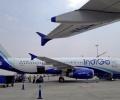
Some aircraft technicians at IndiGo are on sick leave since Friday demanding a revision in salaries. The protest comes days after the airline partially restored salaries of its pilots and cabin crew and made changes to its human resource (HR) policies. Some technicians in Hyderabad reported sick on Friday night while those from other bases skipped work on Sunday demanding a revision in salary, an industry source said.
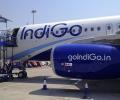
IndiGo's management is of the opinion that Saturday's flight delays caused by sick leaves taken by many in the cabin crew are just an aberration. The airline's on-time performance nosedived to 45 per cent on Saturday as a large part of the cabin crew reported sick to participate in Air India's recruitment process. Privately, Air India executives denied holding interviews on Saturday and the airline did not issue any statement.

More than 1,600 employees of Air India, the former state-run carrier now owned by the Tata group, have opted for voluntary retirement under a scheme announced on June 1. These employees comprise 22 per cent of permanent staff (around 7,000). The airline has a total employee strength of around 10,800, including those on contract.
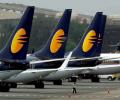
Jet Airways has complained to India's aviation regulator about the use of its livery on SpiceJet aircraft, saying the practice could "mislead the public" and is a safety hazard. Jet collapsed in 2019 and lessors repossessed its Boeing 737s. Some of these aircraft were leased to SpiceJet, which operates them without changing the livery. Jet, which is now being revived by the Kalrock Jalan consortium and aims to restart operations in September, has asked the Directorate General of Civil Aviation (DGCA) to ask SpiceJet to stop using its livery.

The depreciation in rupee may pose a problem for students who have taken loans from Indian lenders.

Visa delays have perturbed Indian visitors this summer. But a solution could be in sight soon, as embassies gear up to address the challenges caused by a spike in applications and staff shortages. While the British High Commission has said it is working urgently to reduce the current visa processing time, the German Embassy has introduced extra shifts to process more visas. However, appointments with the latter are fully booked till August-end due to high volumes.
Six consecutive profitable quarters after an equal number of losses - for Bharti Airtel, the turnaround has been quick. But it is not a result of higher tariffs or absence of exceptional items alone. Execution and strategy are playing a part, too. Bharti Airtel's chief executive officer Gopal Vittal summed it up in a post-result conference call last month. "We track the profit in each of our 237,500 (cell) sites.
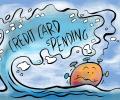
The Reserve Bank of India's (RBI's) recent decision to allow credit cards for payments through the Unified Payments Interface (UPI) is likely to attract a merchant discount rate (MDR), said a top payment industry source. For smaller merchants, a subsidy for MDR could be provided. "With credit card-UPI linkage, UPI will not only be a payment instrument but also a lending platform. "How can banks lend without a commercial model? Also, the government has said MDR will be zero for payment products but not for lending products," the source said, indicating the MDR regime for credit card-linked UPI payments.
'We should have calmed down the child. We will do an internal analysis on that.'

Air India is set to increase capacity on domestic and international routes over the next few months as it overhauls its grounded aircraft. Air India has the approval to operate 2,456 flights per week in the summer schedule. This is more than a 16 per cent increase over 2020. But its international schedule has declined 41 per cent (compared to winter 2019) to 361 weekly departures.

A day after the Reserve Bank of India's (RBI's) Monetary Policy Committee hiked the policy repo rate by 50 basis points (bps), several commercial banks, including ICICI Bank and Bank of Baroda, raised their external benchmark-linked loan rates by an equal amount on Thursday. HDFC, the country's largest mortgage lender, too, increased its interest rates on housing loans by another 50 bps. In total, it has raised rates by 85 bps since May 4, when the RBI had increased the repo rate by 40 bps in an off-cycle meeting.

Airports hold pride of place in the government's National Monetisation Pipeline (NMP) programme to monetise public assets. Private airport operators, including the Adani group, Fairfax, GMR and Zurich Airport, are expected to evince interest in the next round of public private partnership (PPP) development of state-owned Airport Authority of India (AAI) airports. Industry analysts, however, do not expect bids to be as high as the last round, which saw Adani group gain control of six airports.
Spending through the credit card in March 2022 jumped 48 per cent year-on-year to top Rs 1 trillion -- five months after it had hit the same figure for the first time in October 2021, buoyed by festive season expenditure. The jump has been driven by the pickup in consumption as the pandemic recedes. Expenditure in March, at Rs 1.07 trillion, was up 24.5 per cent over February, the data put out by the Reserve Bank of India (RBI) showed.

Technology giant Apple has informed its customers in India that it will no longer store their card information on file and will not be accepting payments made by debit cards and credit cards for purchases or subscriptions on the App store or other Apple services. The decision has been taken by the US-based company in view of the Reserve Bank of India's (RBI's) card data storage guidelines, which will kick in from July 1. The deadline for implementing these norms was extended twice.
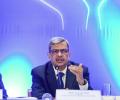
'Had there been no war, maybe, we would come out with a 7.5 per cent stake sale.' 'At this point in time, a 3.5 per cent stake sale looked good.'
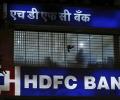
Defying trends, the country's largest private sector lender, HDFC Bank, has shifted its asset mix significantly towards high-rated segments. As a result, its wholesale-to-retail mix has tilted heavily in favour of wholesale, even at the cost of margins. Further, it is even looking to ramp up its branch network, with an aim to service clients within a 1-2 km radius rather than the current 5-6 km radius.
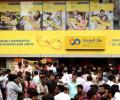
'The money is readily available to the depositors.'
Air India will no longer enjoy a priority in allocation of international traffic rights. This follows its takeover by Tata Sons in January. The Directorate General of Civil Aviation has dropped a clause which gave Air India an advantage over other private airlines in the amended rules issued on April 19.
We have not been able to communicate in a very articulate manner and clear manner on the merger as earnings were due, says HDFC CEO.
 © 2026 Rediff.com - Advertise with us - Disclaimer - Privacy Policy - Sitemap - Feedback - About us - Terms of use - Grievances